ERVA or FISSURES
In Hebrew, the term erva “variously describes the genital organ, nudity, a flow, or a breach. By cross-referencing the different uses of the term, we understand that this root in Hebrew always has something to do with an opening, or a fissure through which a liquid may flow. It refers alternately to a secret place, or to a place that secretes.”
And further: “The best translation of the word erva is therefore, in my view, ‘zone of secretion,’ a place of passage between the inside and the outside of a tissue or a body. What is hidden becomes visible there. The secret is revealed and what is concealed becomes bare.”
Quoted from Delphine Horvilleur, En tenue d’Eve, féminin, pudeur et judaïsme, pp. 105–106
“For several years now, I have been working on fissures.
I could even say, somewhat ironically, that I have become a specialist in fissures.
I tried to understand, in hindsight, what led me to explore this unlikely field.
What must be kept in mind is that I have been practicing Moroccan tadelakt for more than 15 years. Tadelakt, a true ‘massage’ of the plaster-skin—lime in the process of becoming limestone again—requires particular attention to the potential emergence of cracks. One therefore works against future fissures. If one does not carry out this work of tightening the material, of polishing the plaster with a stone all the way through, they will eventually appear afterward. They are thus the artisan’s nightmare, since tadelakt is originally meant to provide waterproofing to a structure.
For years, then, I fought against fissures that wanted to appear, to emerge. Years—that is a long time spent tightening material to prevent their appearance. And when I began my work as an artist, this is what happened first: I released the fissures. I finally allowed myself to play with them. What a delight! It felt like both a liberation and a revelation.
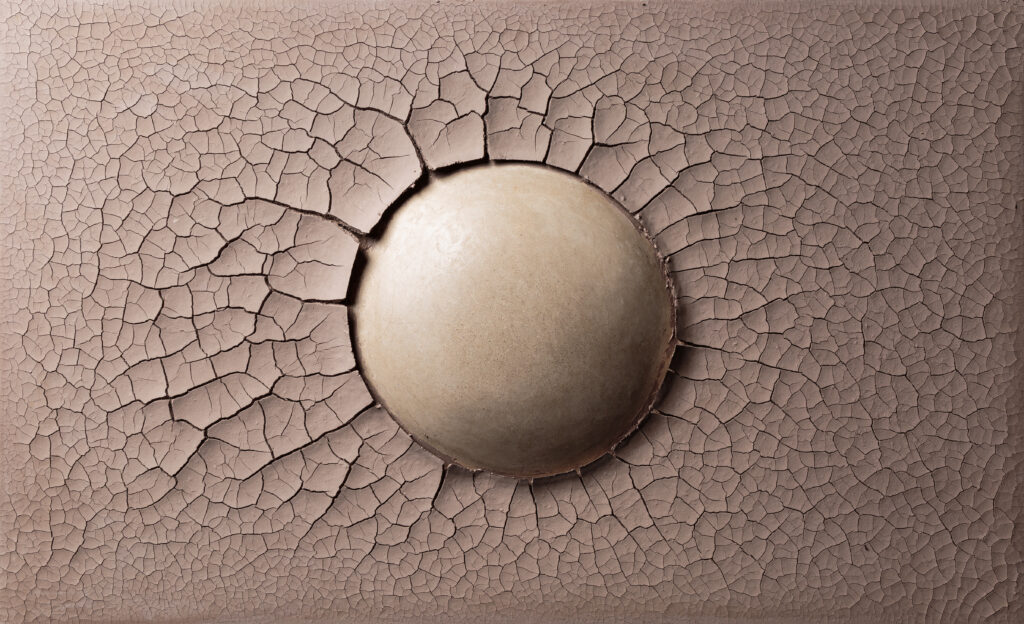
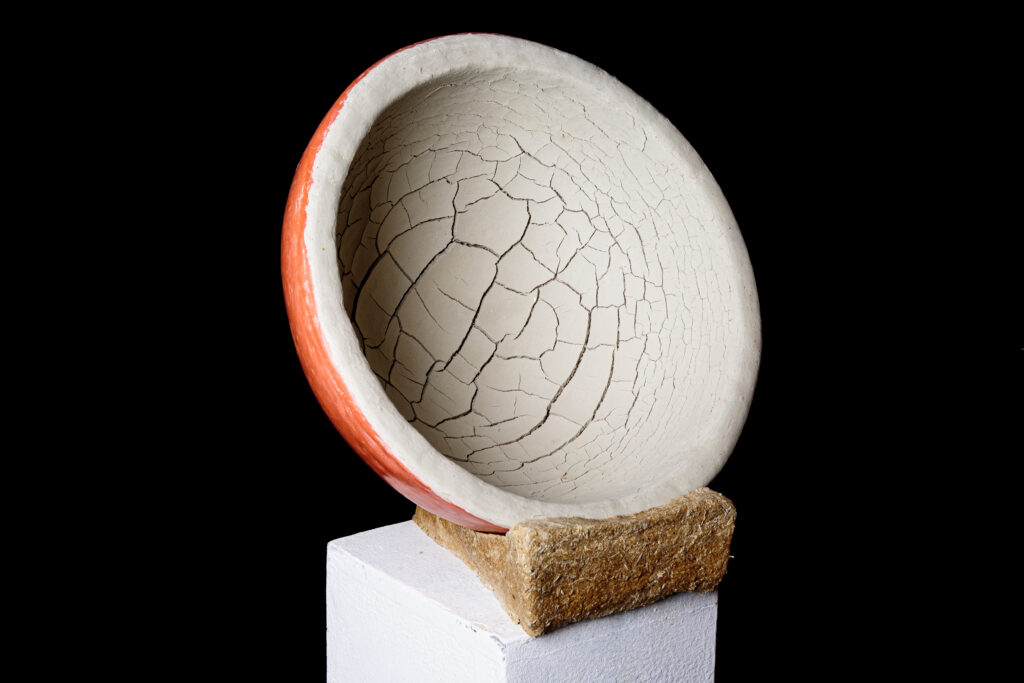
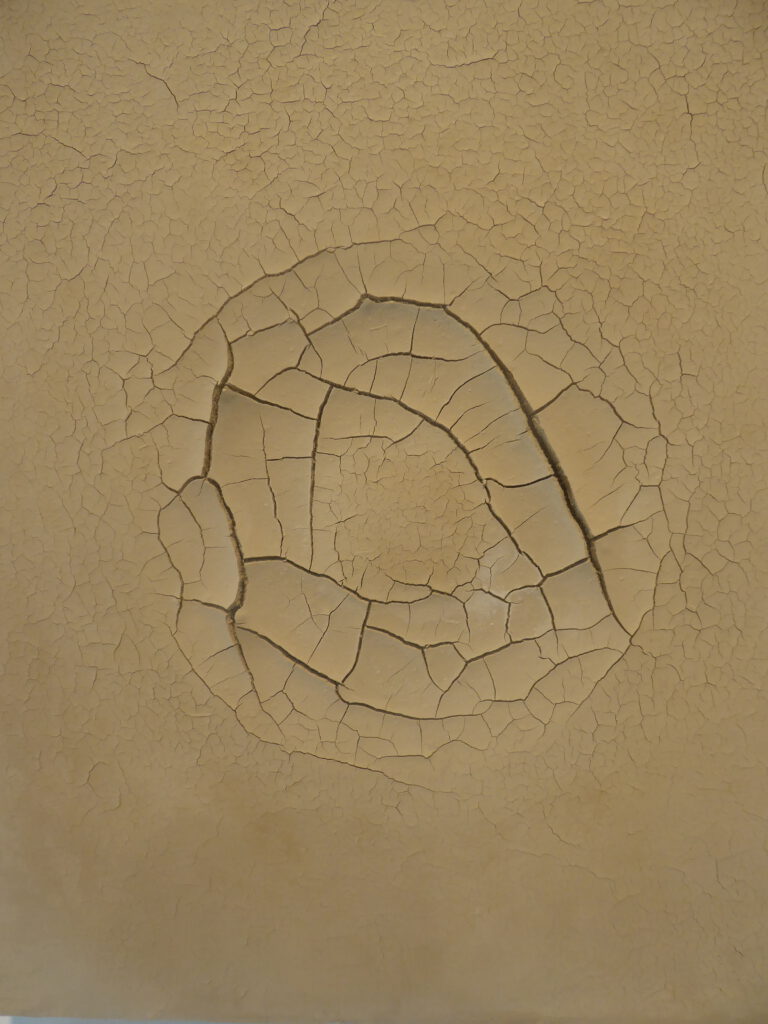
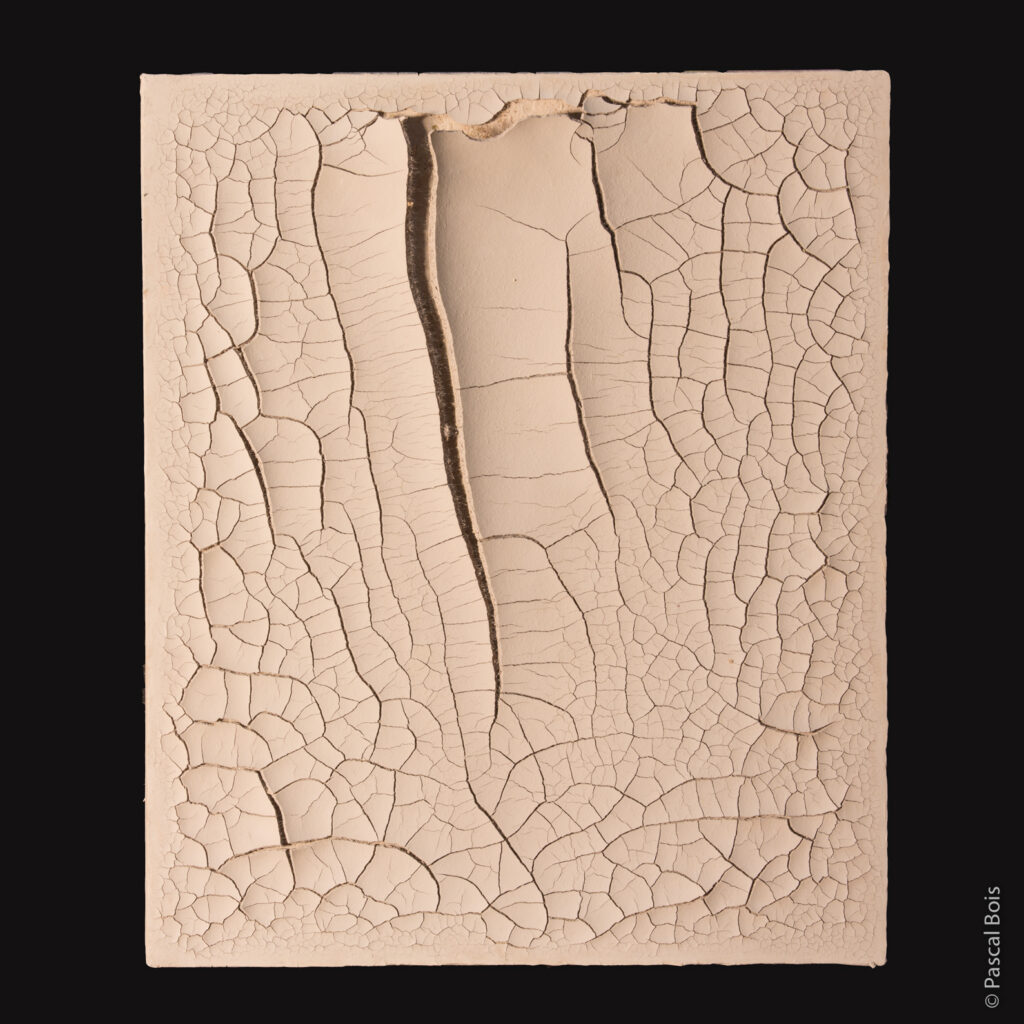
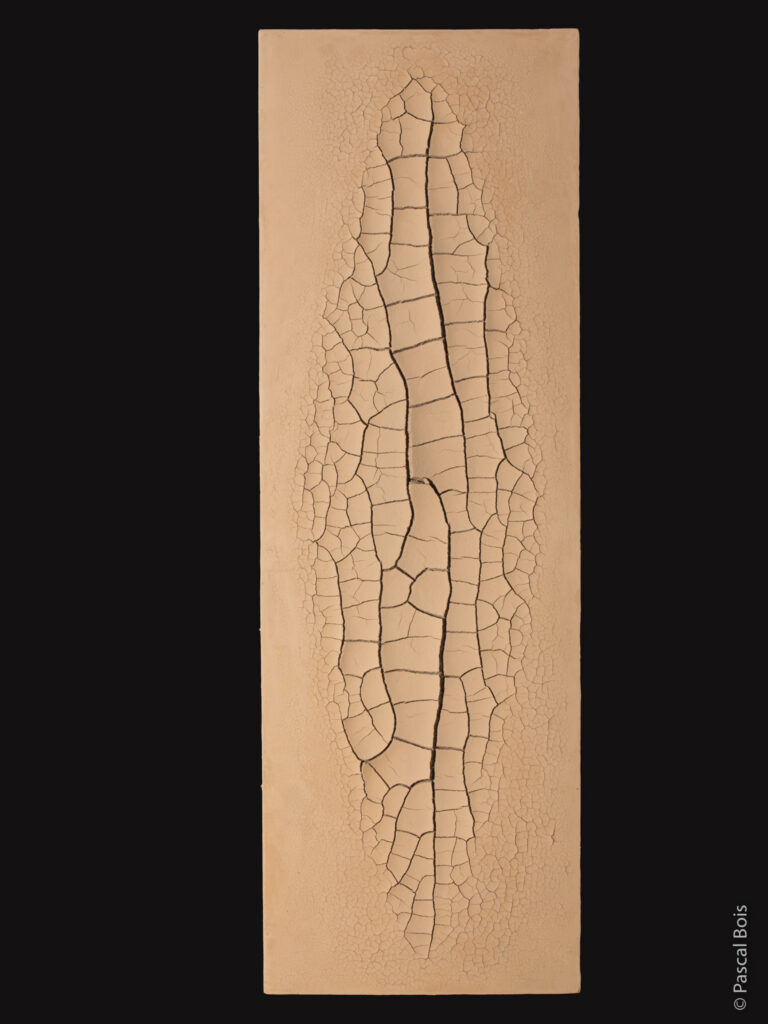
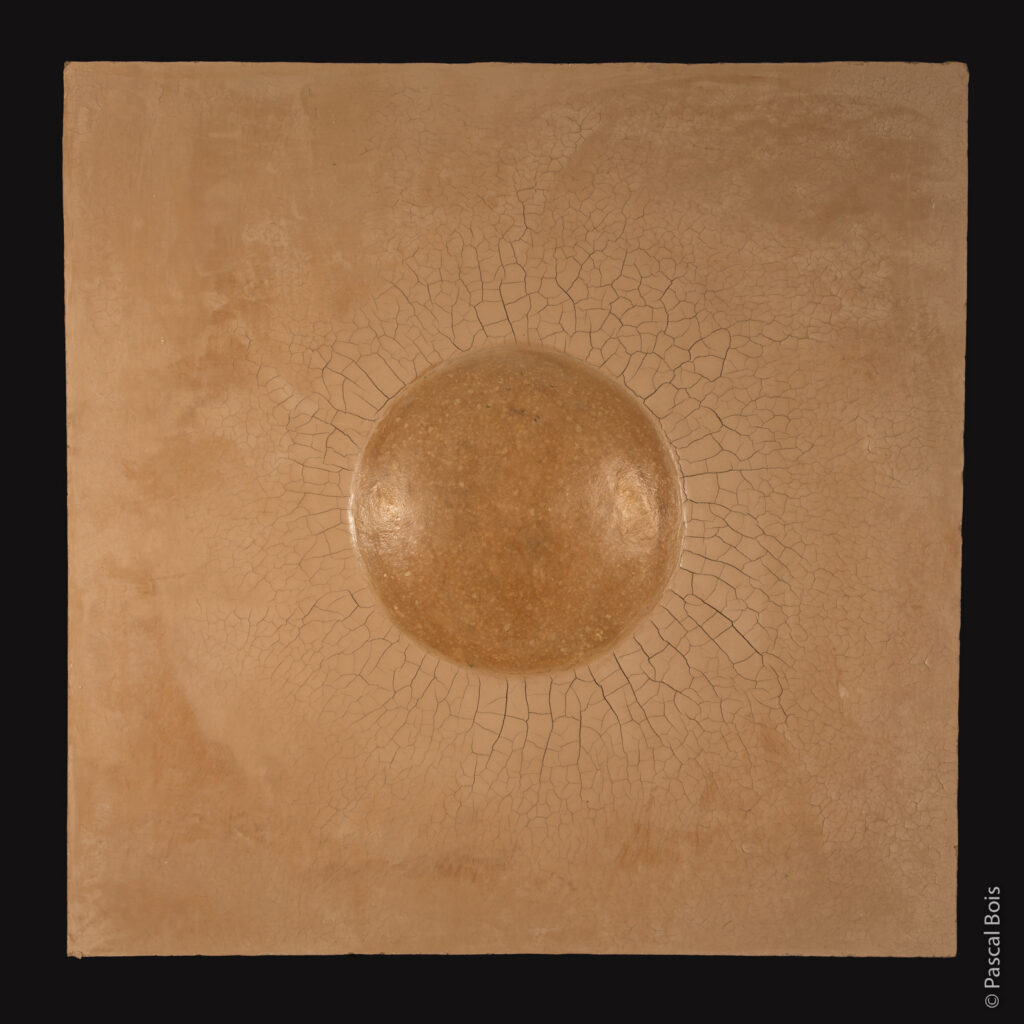
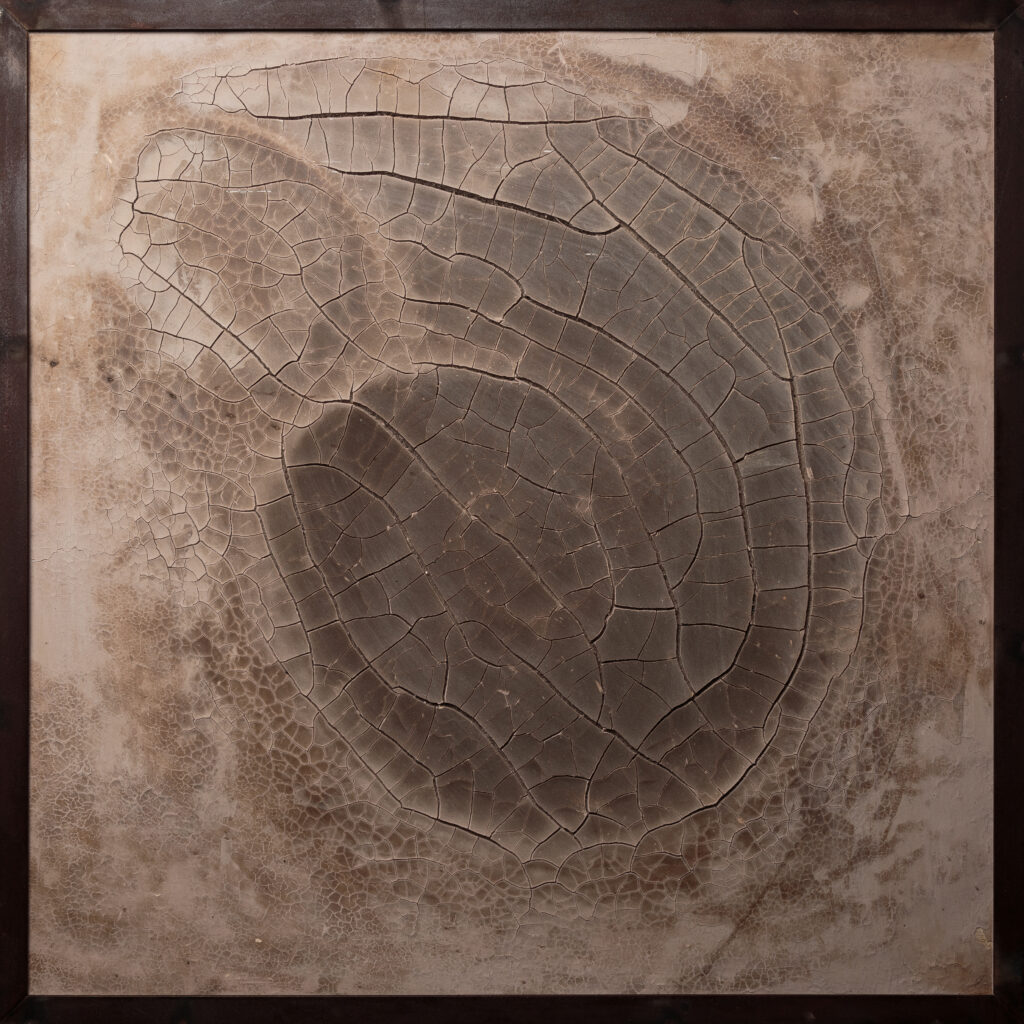
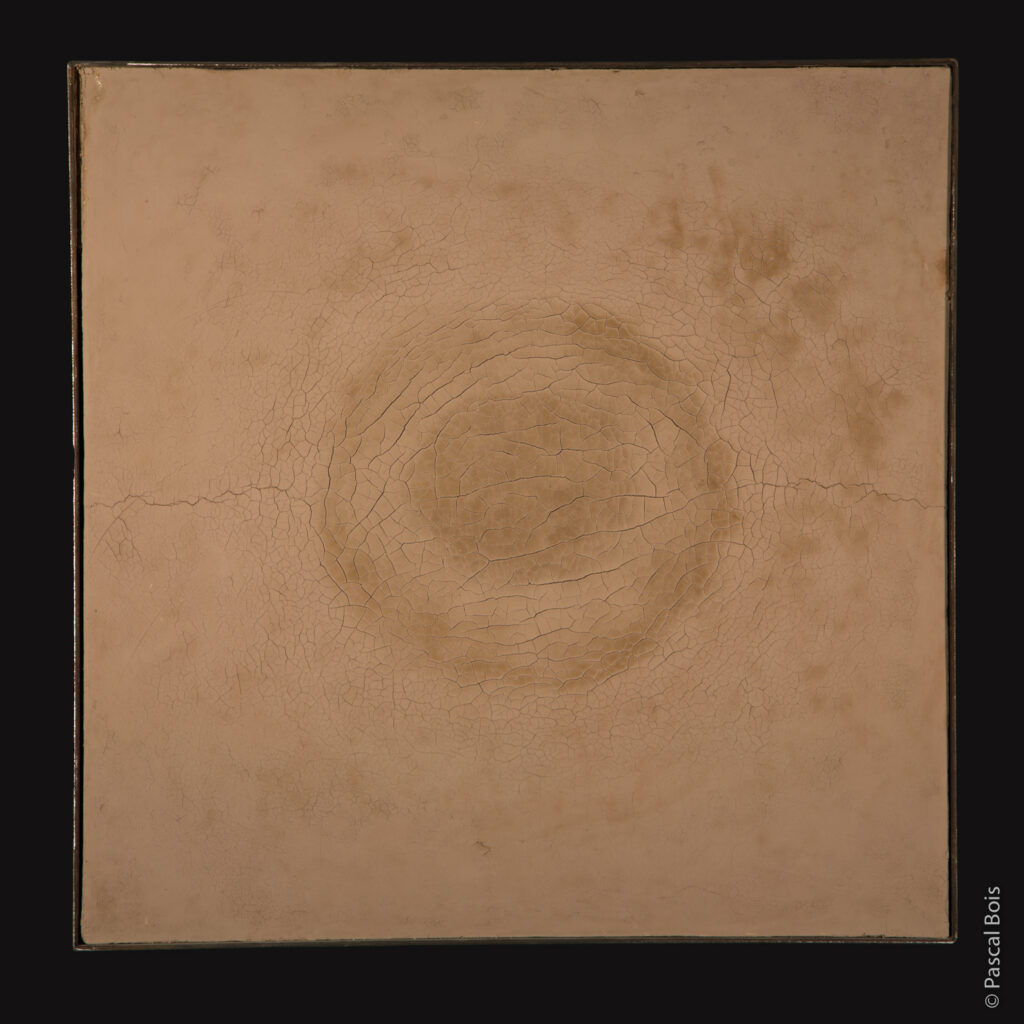
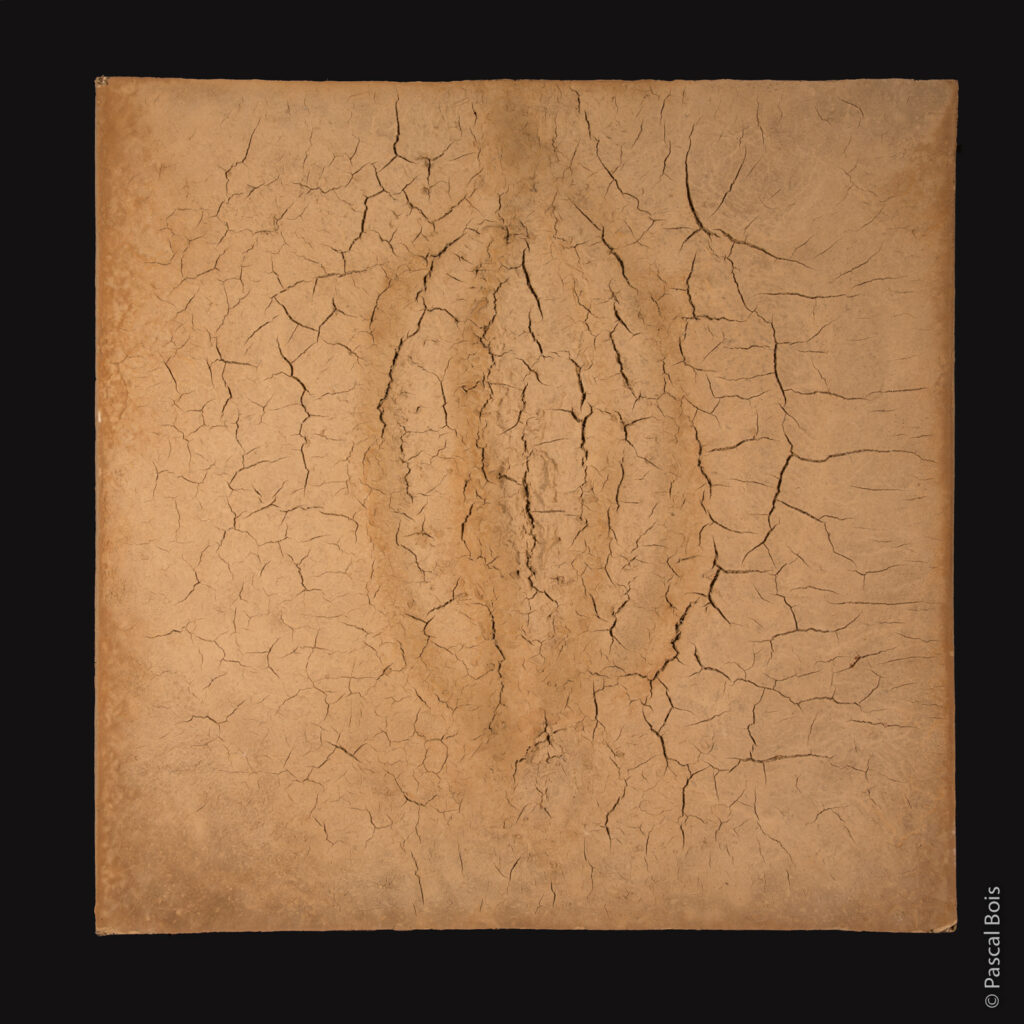
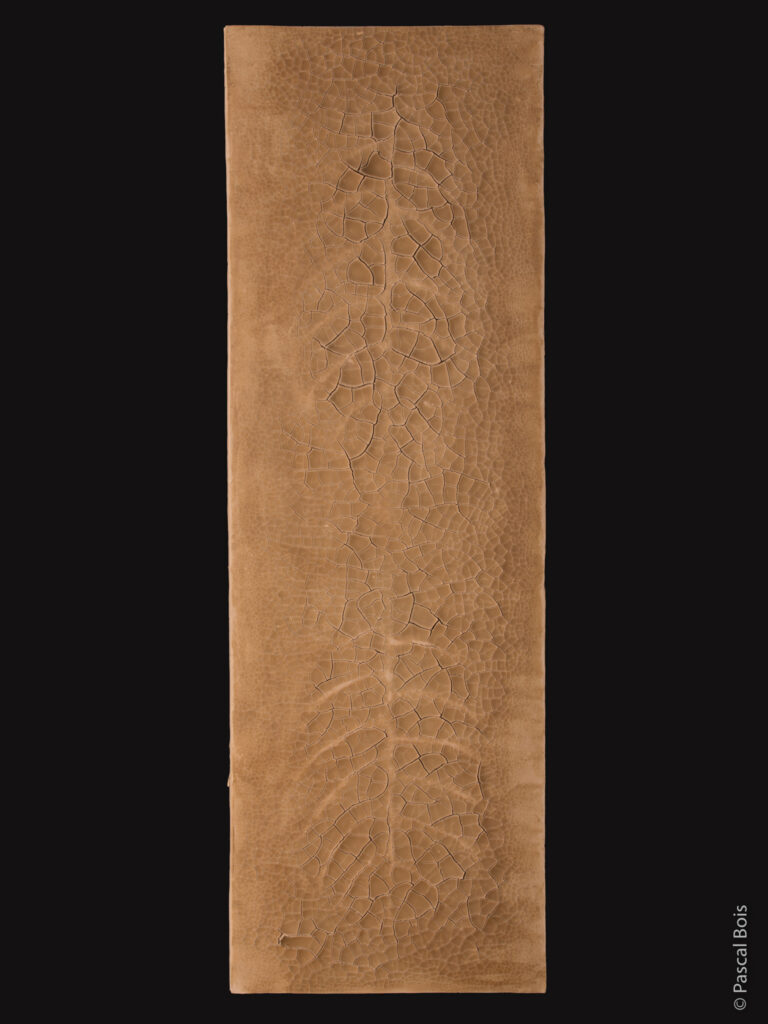
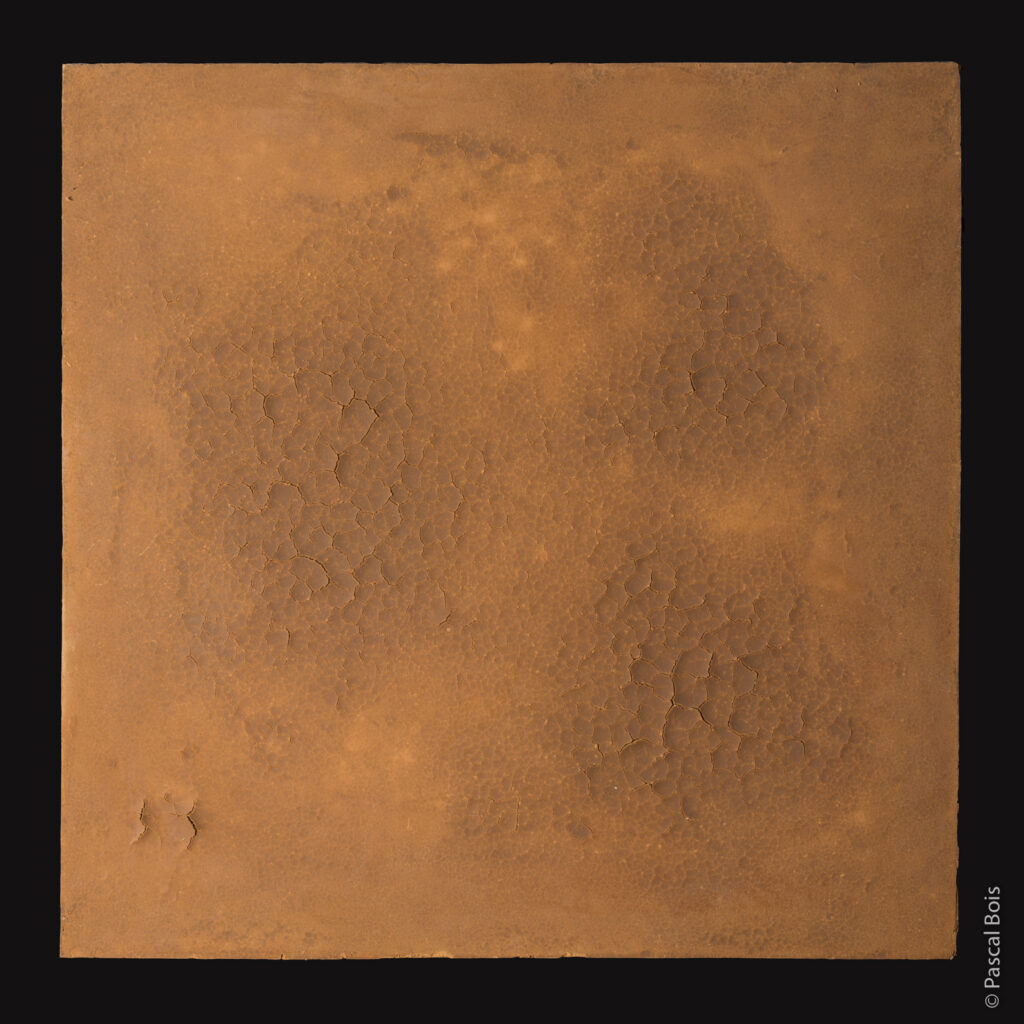
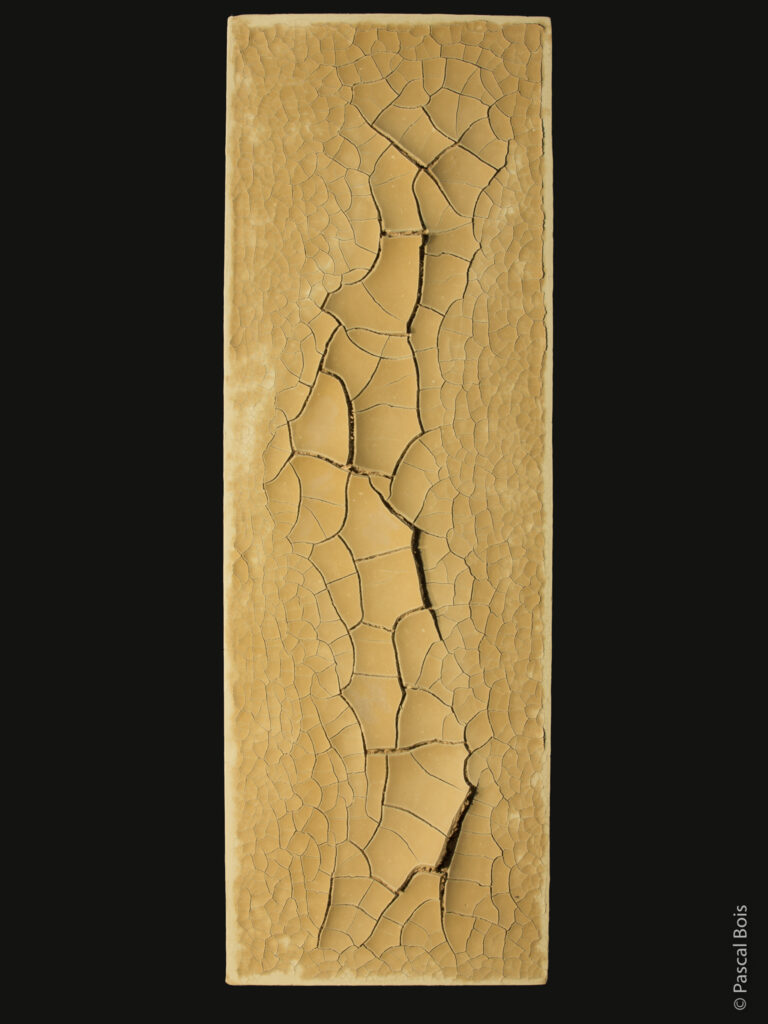
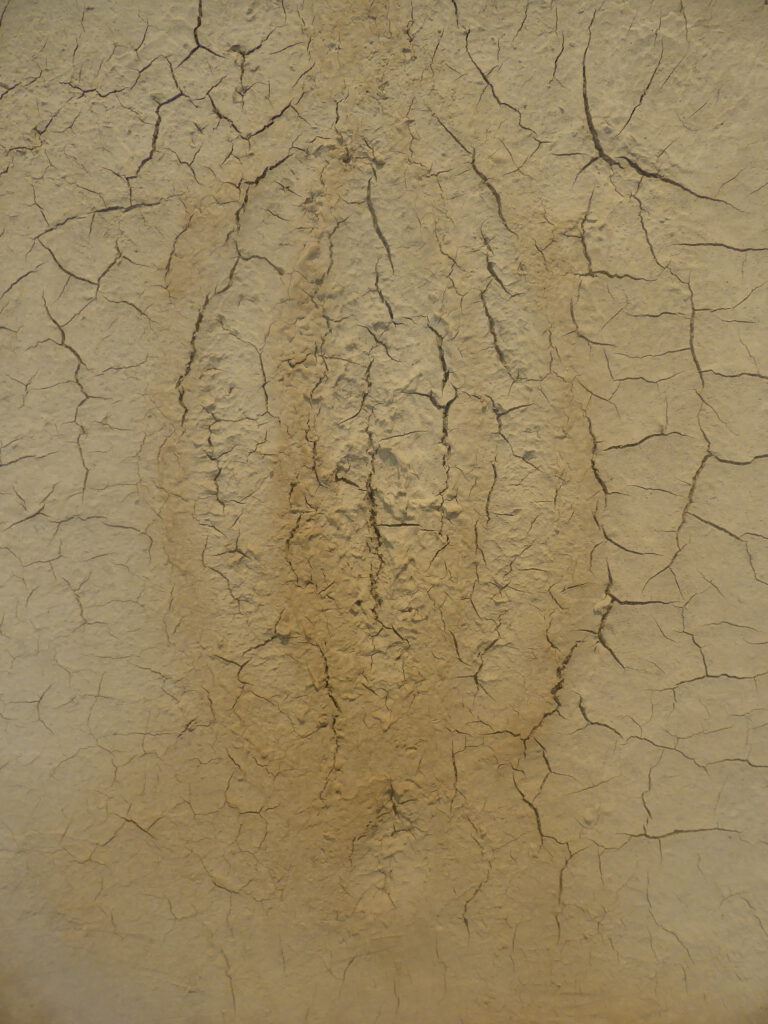
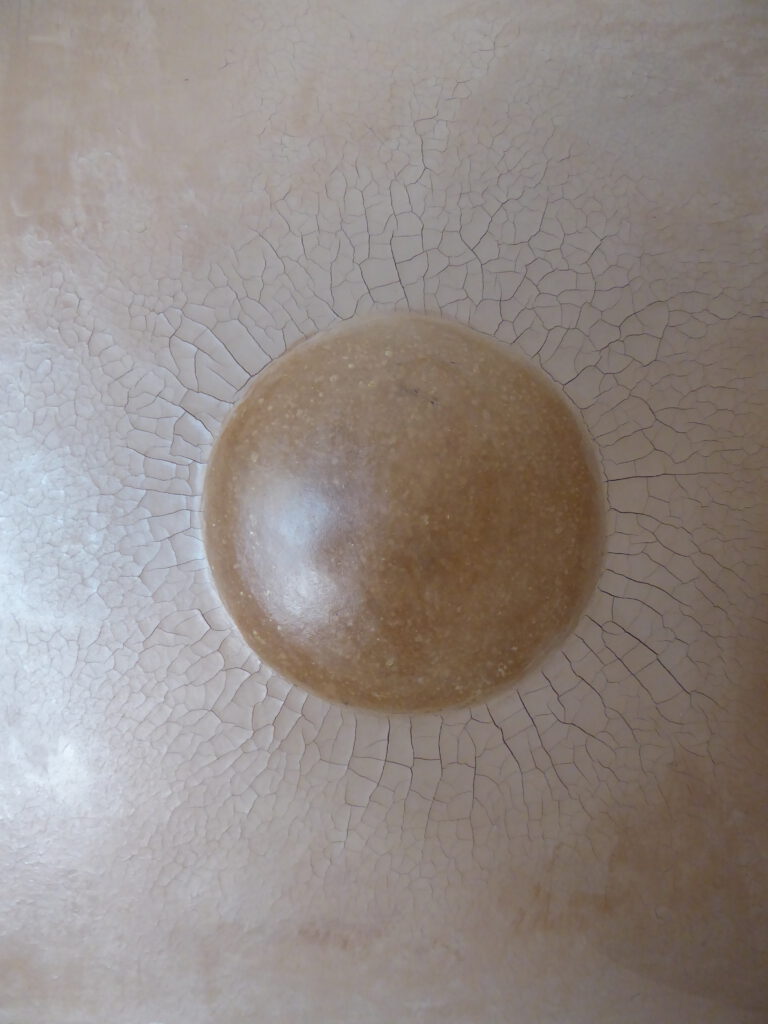
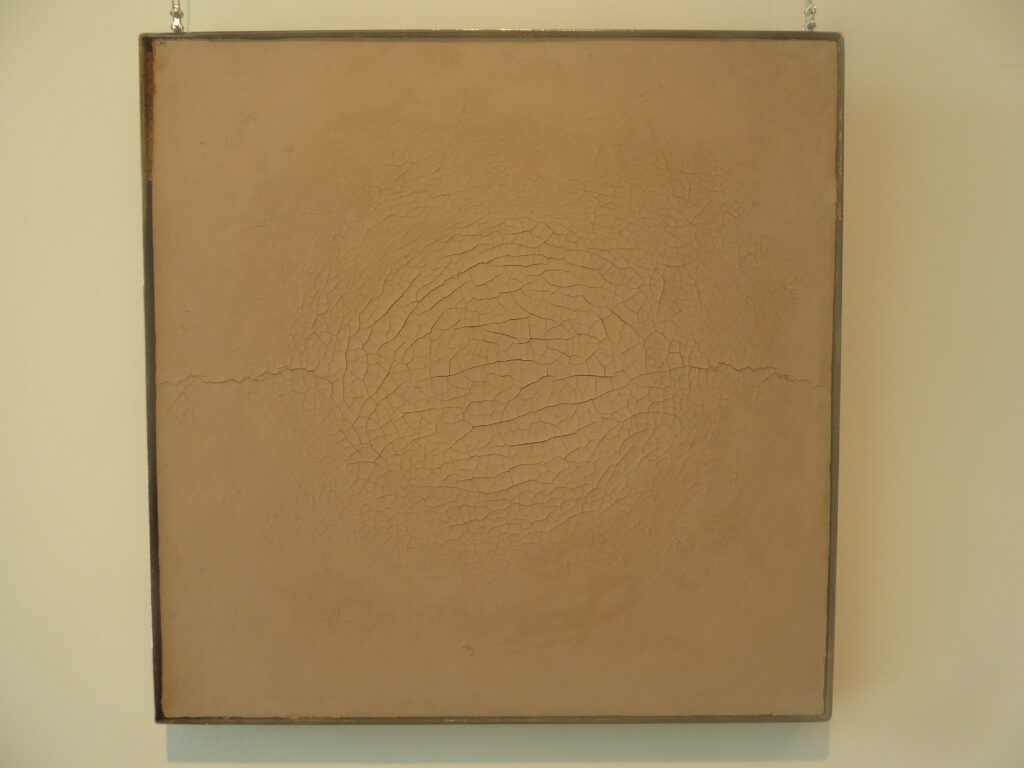
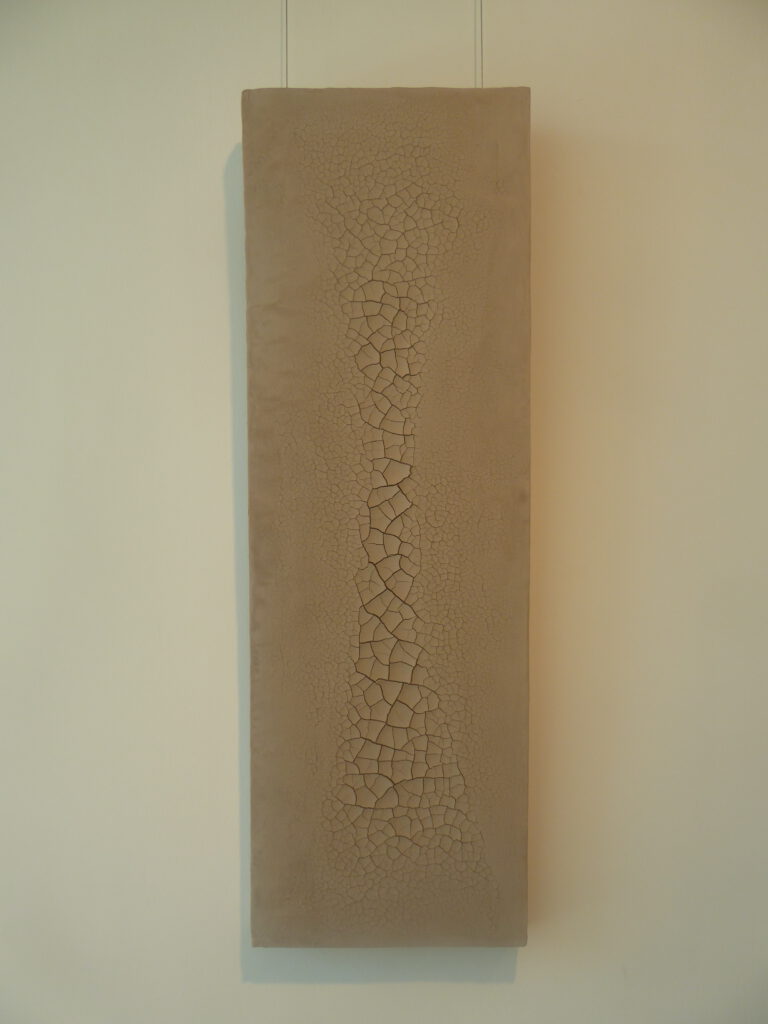
It is a process of revelation in the sense that fissures appear afterward, progressively. I work the base—a support to which I give form, with micro-variations in depth—and then, in a second stage, I apply a slip of almost pure clay. Cracks will emerge from it, but one cannot predict exactly where. At the time, I mainly knew how to make them disappear. Gradually, I came to better understand the parameters underlying their expression—the art of the fissure. The revelation lies in the fact that they appear after the fact. One must wait some time to see them fully emerge. It is like photographic development: the darkroom process in which the image appears afterward (one among infinitely many others, probably), even though it has been carefully composed beforehand.
What do fissures reveal? When I began to explore this question, I realized it referred to many things: a crack, an apparent fragility born of opposing tensions, an opening, a fault line between two continents that causes their drift, but also a kind of metaphorical image of the vulva (cf. Delphine Horvilleur)…
Beyond their aesthetic beauty, these works are the trace of a liberation, the result of a journey in which restraint has given way to play with limits, and where fragility, instead of being seen as a flaw, is instead magnified.”
In Hebrew, the term erva “variously describes the genital organ, nudity, a flow, or a breach. By cross-referencing the different uses of the term, we understand that this root in Hebrew always has something to do with an opening, or a fissure through which a liquid may flow. It refers alternately to a secret place, or to a place that secretes.”
And further: “The best translation of the word erva is therefore, in my view, ‘zone of secretion,’ a place of passage between the inside and the outside of a tissue or a body. What is hidden becomes visible there. The secret is revealed and what is concealed becomes bare.”
Quoted from Delphine Horvilleur, En tenue d’Eve, féminin, pudeur et judaïsme, pp. 105–106
“For several years now, I have been working on fissures.
I could even say, somewhat ironically, that I have become a specialist in fissures.
I tried to understand, in hindsight, what led me to explore this unlikely field.
What must be kept in mind is that I have been practicing Moroccan tadelakt for more than 15 years. Tadelakt, a true ‘massage’ of the plaster-skin—lime in the process of becoming limestone again—requires particular attention to the potential emergence of cracks. One therefore works against future fissures. If one does not carry out this work of tightening the material, of polishing the plaster with a stone all the way through, they will eventually appear afterward. They are thus the artisan’s nightmare, since tadelakt is originally meant to provide waterproofing to a structure.
For years, then, I fought against fissures that wanted to appear, to emerge. Years—that is a long time spent tightening material to prevent their appearance. And when I began my work as an artist, this is what happened first: I released the fissures. I finally allowed myself to play with them. What a delight! It felt like both a liberation and a revelation.
It is a process of revelation in the sense that fissures appear afterward, progressively. I work the base—a support to which I give form, with micro-variations in depth—and then, in a second stage, I apply a slip of almost pure clay. Cracks will emerge from it, but one cannot predict exactly where. At the time, I mainly knew how to make them disappear. Gradually, I came to better understand the parameters underlying their expression—the art of the fissure. The revelation lies in the fact that they appear after the fact. One must wait some time to see them fully emerge. It is like photographic development: the darkroom process in which the image appears afterward (one among infinitely many others, probably), even though it has been carefully composed beforehand.
What do fissures reveal? When I began to explore this question, I realized it referred to many things: a crack, an apparent fragility born of opposing tensions, an opening, a fault line between two continents that causes their drift, but also a kind of metaphorical image of the vulva (cf. Delphine Horvilleur)…
Beyond their aesthetic beauty, these works are the trace of a liberation, the result of a journey in which restraint has given way to play with limits, and where fragility, instead of being seen as a flaw, is instead magnified.”