WINGED PHALLUSES or TINTINABULUM and the History of OUILLES
In tribute and in memory of my very dear and much-missed friend Isabelle Erchoff
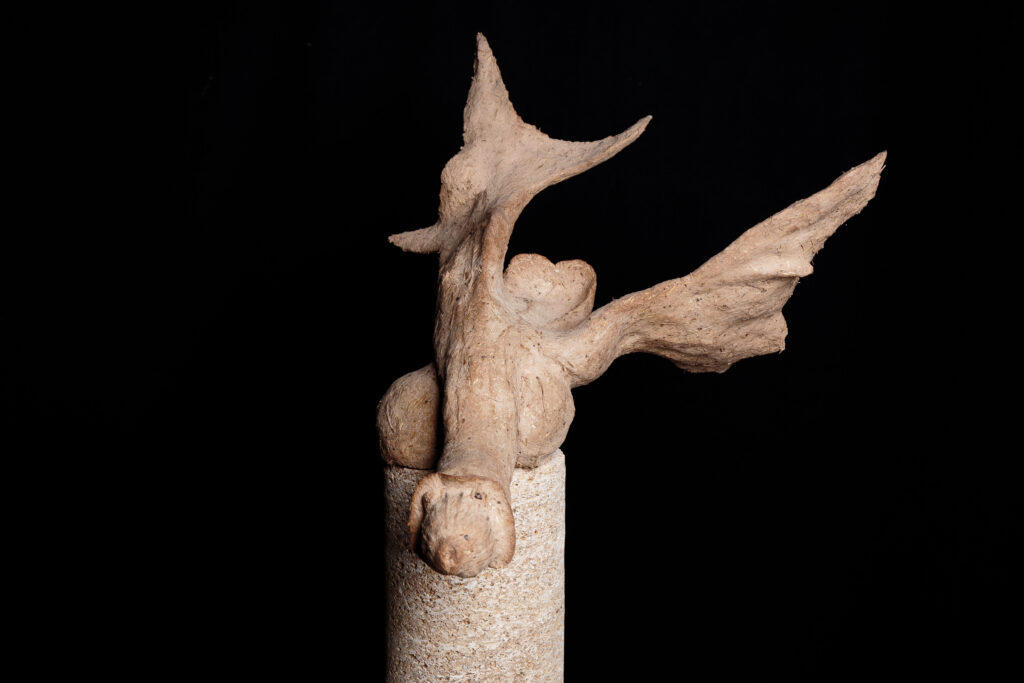
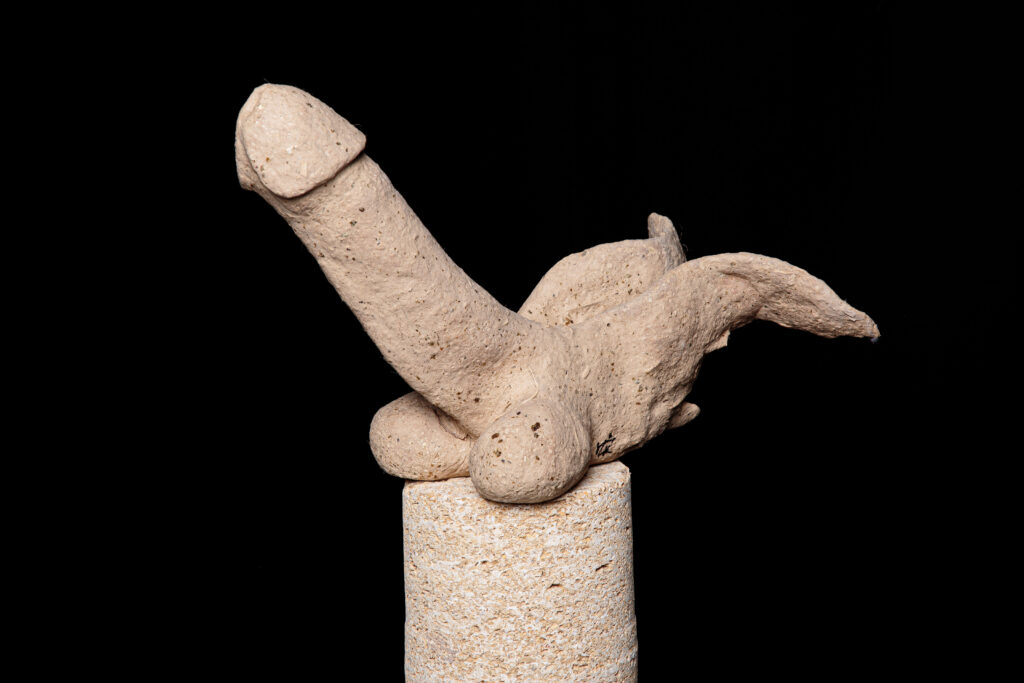
In Ancient Rome, winged phalluses, or tintinabulums, were talismanic objects placed at the entrance of homes; often fitted with little bells, they would jingle when a visitor arrived.
Bringers of good fortune—something like a mezuzah or a Hand of Fatima of antiquity—symbols of fertility, luck, and power, they were a common domestic expression of virile and patriarchal sexuality. One can imagine that the small and great machos of the time particularly enjoyed displaying them at the front of their domus. Yet they were not devoid of expressiveness and a certain form of humor.
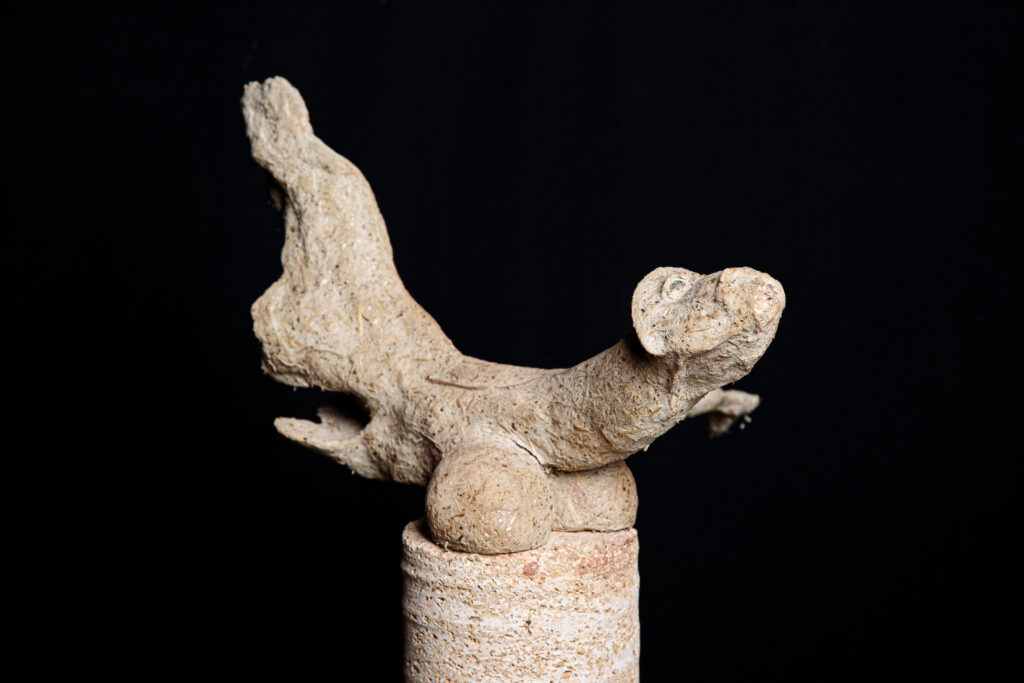
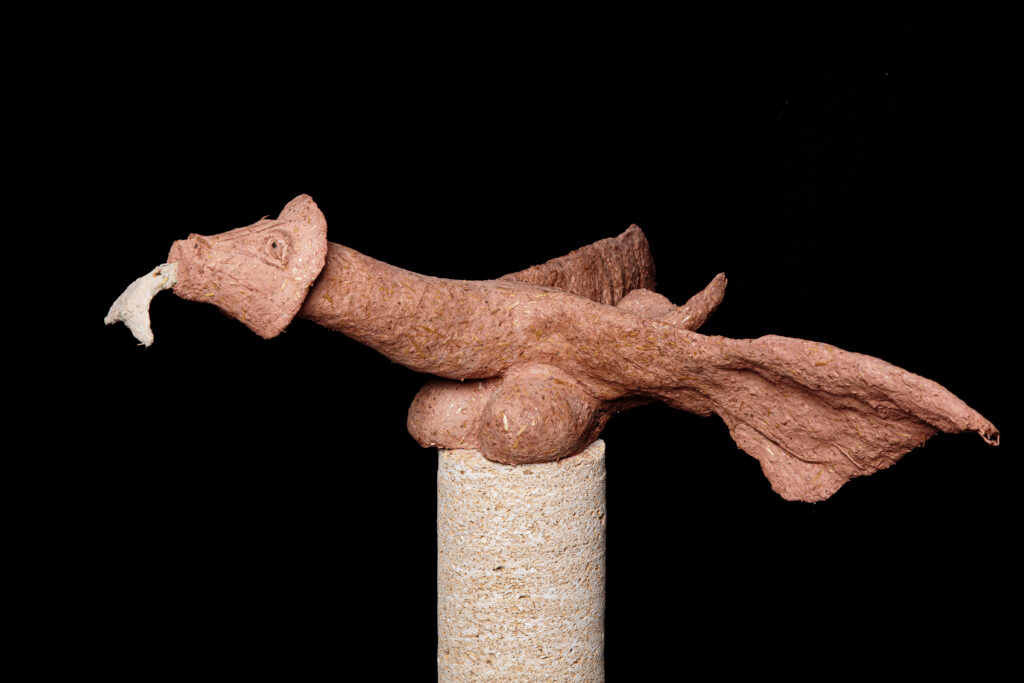
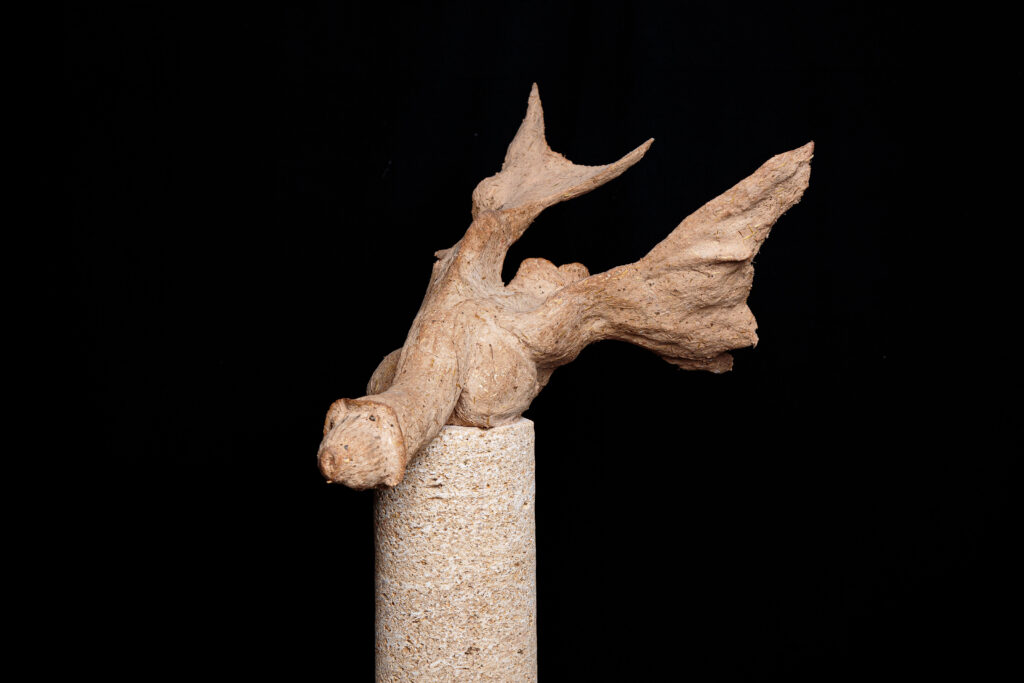
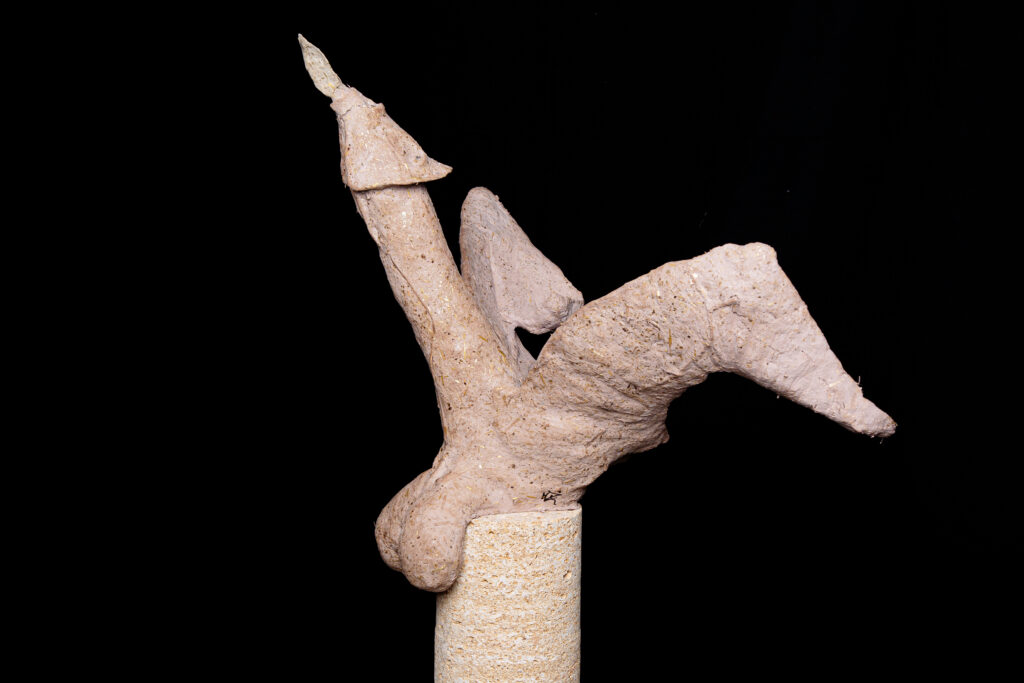
I took up this theme and reinterpreted it in my own way.
The winged phalluses gradually began to resemble dragons.
The unexpected pleasure I found in shaping, kneading, and molding these clay phalluses also led me toward a broader reflection (very much in tune with the times) on myths related to power, masculinity, and virility…
I also came to understand that any invocation of power implicitly speaks of its absence—this great and eternal anxiety of men: that “it” may no longer rise.
Against this injunction to perform “properly,” perhaps the time has come to relearn how to appreciate softness?
To further anthropomorphize my winged phalluses (as one might find oneself doing in the intimacy of everyday life), I gave them names, attributes, and qualities:
Popaul the First.
Initiating a long lineage, closest to his original nature, he is a model of harmony and voluptuousness rarely equaled thereafter. He points toward the midday sun, innocently unaware of the winter that cannot be far away.
Rodur the Conqueror.
Well raised in every sense of the term: afflicted with congenital priapism, he is always ready to be of service. His motto: “A hole is a hole and is not made to hide in.”
Viktor the Untamed.
Nervous, always ready for action, not without a certain cunning; his saying is: “Better a small hard worker than a big lazy one.”
Mister Flabada.
Observant, phlegmatic, playful, gently ironic, he especially enjoys being pampered. His crest reads: “Better to withdraw at the right time than to finish first.”
Rocco the Valiant.
Persistent in effort, tenacious—hardworking, some would say—Rocco is the ideal companion for long journeys. A few compliments and he will give himself body and soul in your service; somewhat narcissistic, he delights above all in seeing himself in the act.
His saying: “Fly high to aim far.”
In tribute and in memory of my very dear and much-missed friend Isabelle Erchoff
In Ancient Rome, winged phalluses, or tintinabulums, were talismanic objects placed at the entrance of homes; often fitted with little bells, they would jingle when a visitor arrived.
Bringers of good fortune—something like a mezuzah or a Hand of Fatima of antiquity—symbols of fertility, luck, and power, they were a common domestic expression of virile and patriarchal sexuality. One can imagine that the small and great machos of the time particularly enjoyed displaying them at the front of their domus. Yet they were not devoid of expressiveness and a certain form of humor.
I took up this theme and reinterpreted it in my own way.
The winged phalluses gradually began to resemble dragons.
The unexpected pleasure I found in shaping, kneading, and molding these clay phalluses also led me toward a broader reflection (very much in tune with the times) on myths related to power, masculinity, and virility…
I also came to understand that any invocation of power implicitly speaks of its absence—this great and eternal anxiety of men: that “it” may no longer rise.
Against this injunction to perform “properly,” perhaps the time has come to relearn how to appreciate softness?
To further anthropomorphize my winged phalluses (as one might find oneself doing in the intimacy of everyday life), I gave them names, attributes, and qualities:
Popaul the First.
Initiating a long lineage, closest to his original nature, he is a model of harmony and voluptuousness rarely equaled thereafter. He points toward the midday sun, innocently unaware of the winter that cannot be far away.
Rodur the Conqueror.
Well raised in every sense of the term: afflicted with congenital priapism, he is always ready to be of service. His motto: “A hole is a hole and is not made to hide in.”
Viktor the Untamed.
Nervous, always ready for action, not without a certain cunning; his saying is: “Better a small hard worker than a big lazy one.”
Mister Flabada.
Observant, phlegmatic, playful, gently ironic, he especially enjoys being pampered. His crest reads: “Better to withdraw at the right time than to finish first.”
Rocco the Valiant.
Persistent in effort, tenacious—hardworking, some would say—Rocco is the ideal companion for long journeys. A few compliments and he will give himself body and soul in your service; somewhat narcissistic, he delights above all in seeing himself in the act.
His saying: “Fly high to aim far.”